By Trilby
Let’s be honest for a second.
As teachers, we’re used to adapting to new tools and technology, but AI has moved from “something to be aware of” to something our students are actively using every day.
They’re asking about it. Testing it. Relying on it.
That means we need AI lessons that help them understand and use it responsibly.
What Students Actually Need from AI Lessons
Before we jump into the activities, let’s simplify this:
Most students don’t need:
- Advanced programming
- Complex machine learning models
- Technical jargon
They do need:
- A clear understanding of how AI works
- Guidance on when and how to use it
- Practice thinking critically about AI outputs
In other words:
👉They need AI lessons that are practical, relevant, and student-friendly.
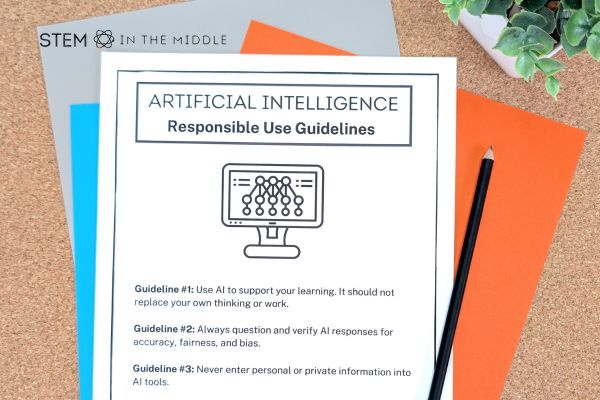
4 Types of AI Lessons Every Classroom Should Include
If you’re building (or searching for) AI lessons, these are the four areas that matter most:
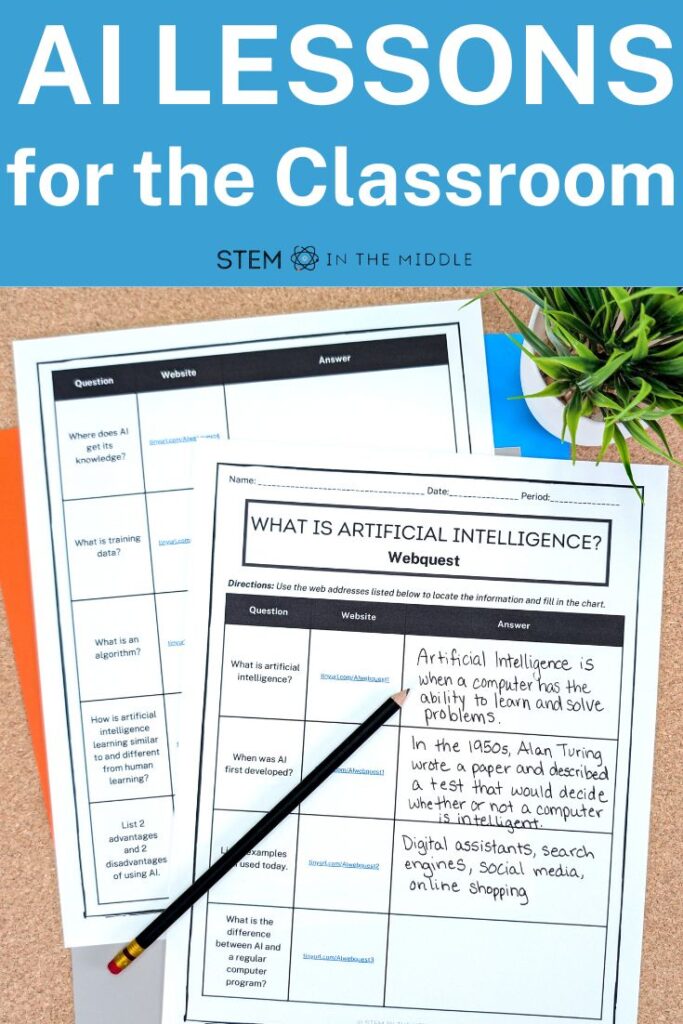
1. How AI Works (Without the Tech Overload)
Students should understand:
- AI learns from data
- It looks for patterns
- It makes predictions based on examples
Simple, hands-on activities (like sorting and classification games) make this click quickly. No coding required!
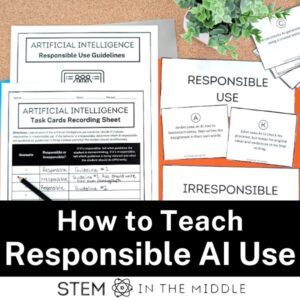
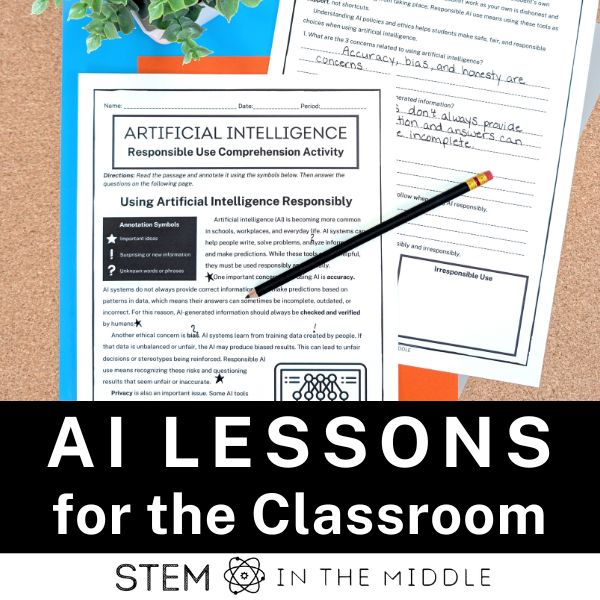
2. Responsible Use of AI
This is the big one.
Students are already using AI… but they don’t always know:
- What’s appropriate
- What counts as cheating
- When AI helps vs. hurts learning
Strong AI lessons should include:
- Real-life scenarios
- Classroom expectations
- Clear do’s and dont’s
3. AI Bias and Limitations
Students often assume AI is always right.
They need to learn:
- AI can be biased
- AI can be wrong
- AI reflects the data it’s trained on
This is where some of the most powerful classroom discussions happen.
4. AI Scenarios and Decision-Making
Students don’t just need to learn about AI. They need to practice making decisions about how to use it.
That’s where scenario-based AI lessons come in.
Students should work through situations like:
- Using AI to help write an essay
- Asking AI for answers on homework
- Using AI to study vs. copy
- Collaborating with AI on a project
Then ask:
- Is this appropriate?
- Why or why not?
- What would you do differently?
Why this matters:
Students often understand the rules… but struggle to apply them.
Scenario-based AI lessons help bridge that gap by:
- making abstract ideas concrete
- encouraging discussion and debate
- building real decision-making skills
👉 This is where responsible use becomes actionable, not just theoretical.

If you’re reading this and thinking…
“This is exactly what my students need, but I don’t have time to create all of this from scratch.”
You’re not alone.
That’s exactly why I created a set of AI lessons that cover these key areas in a way that’s simple to implement and actually works in real classrooms.
Ready-to-Use AI Lessons (Without the Overwhelm)
Instead of piecing together activities, scenarios, and discussions on your own, this bundle gives you a complete set of AI lessons focused on what students actually need:
- Understanding responsible use
- Thinking through real-life scenarios
- Analyzing AI policies and expectations
You can check it out here: